Full Stack Development
Doxy
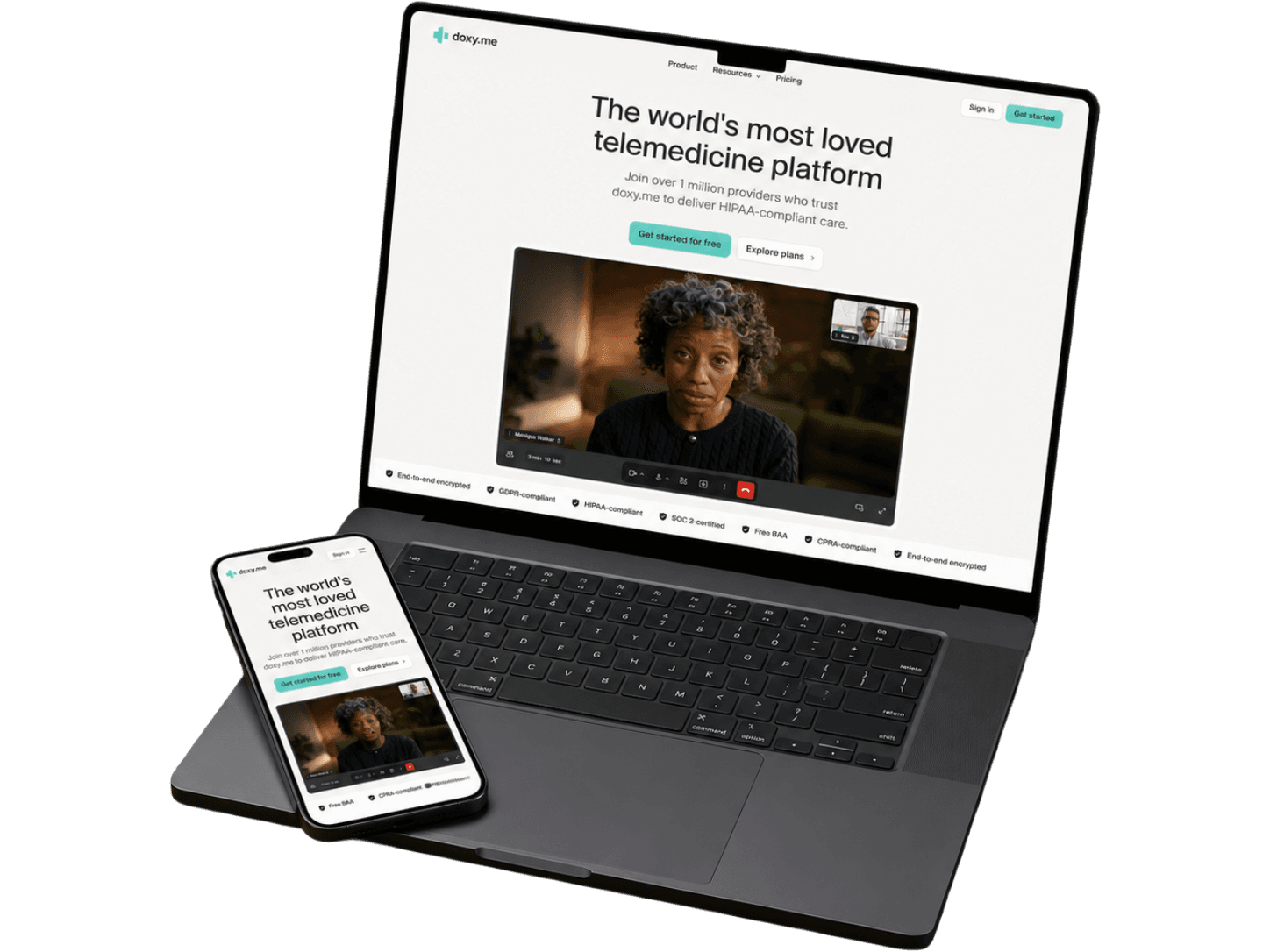
HIPAA-compliant telehealth video platform with NLP chatbot for patient intake.
Industry
Healthcare / Telehealth
Platform
Web
Year
2023
/ Overview
About the project.
Doxy.me is a HIPAA-compliant telehealth platform enabling seamless video consultations between healthcare providers and patients. Delivered an optimised React frontend backed by Node.js/Express.js APIs with MongoDB, containerised via Docker, and integrated NLP-powered chatbots to automate patient intake and scheduling.
Visit live siteHIPAA
Compliant platform
40%
Reduction in admin work
99.9%
Session uptime
Thousands
Concurrent sessions
/ Challenge
The problem we had to solve.
Building a HIPAA-compliant video consultation platform that could handle concurrent sessions at scale while integrating NLP chatbots for patient intake without adding noticeable latency to the user experience.
/ Solution
How we turned it into a working product.
Rebuilt the Node.js/Express.js API layer with connection pooling and query optimisation on MongoDB, containerised the full stack with Docker for consistent deployments, and integrated an NLP chatbot handling symptom collection, appointment booking, and pre-consultation questionnaires.
/ Technology
Stack behind the build.
The tools and platforms used to ship the product, grouped by responsibility.
Frontend
 React
React Next.js
Backend
 Node.jsExpress.js
 MongoDB
DevOps
 DockerGit
/ Team
The delivery team.
4 specialists contributed across delivery, engineering, design, infrastructure, and QA.
/ Goals
Project Goals
Create a reliable, HIPAA-compliant telehealth platform that simplifies consultations for providers and patients alike — with an intelligent chatbot reducing administrative burden on clinical staff so they can focus on care.
Optimised Full Stack Architecture
Rebuilt Node.js/Express.js APIs with connection pooling and MongoDB query optimisation, reducing average API response time and supporting thousands of concurrent video sessions without degradation.
NLP Chatbot Integration
Integrated an NLP-powered chatbot automating patient intake — collecting symptoms, scheduling appointments, and running pre-consultation questionnaires — reducing manual admin work for clinical staff significantly.